WALKING IN THE UPPER VALPOLICELLA BETWEEN NATURE AND HISTORY
percorsi tra Sant’Anna e Fumane
SANT'ANNA D'ALFAEDO
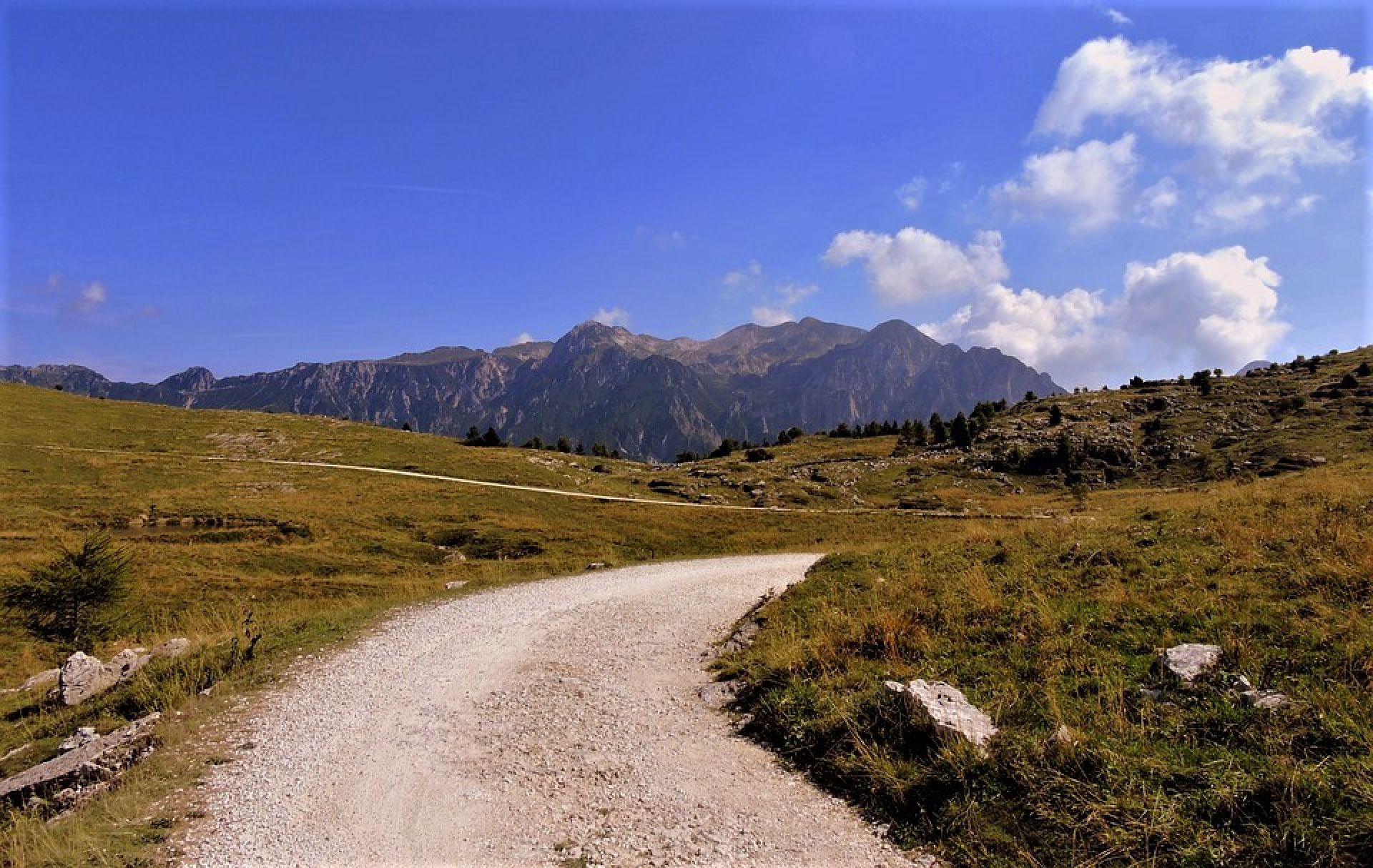
The municipality of Sant'Anna d'Alfaedo is located 30 km north of Verona, on the border between Valpolicella and Lessinia and borders on the Autonomous Province of Trento. It is a green and evocative territory with ancient districts that bear the signs of the life and work of our ancestors. Sant'Anna d'Alfaedo is fascinating for its characteristic constructions in Lessinia stone, a sedimentary stone formed about 70 million years ago that lends itself to various uses, both inside and outside homes and in squares. Among the 72 layers of this stone are precious fossils of vertebrates from the Cretaceous period, now exhibited in the beautiful Palaeontological and Prehistoric Museum in the main town.
This is a land linked to agriculture and livestock breeding that offers high quality cold meats and cheeses.
After a walk among the breathtaking views and alpine pastures of Lessinia, it is easy to enjoy delicious dishes such as mountain gnocchi. Among the beauties to visit and get to know: the Ponte di Veja, the largest natural bridge in Europe, the Spluga della Preta cavity, the Fort Tesoro from the First World War, the Romanesque church of San Giovanni in Loffa.
I- TREASURE MOUNTAIN ROUTE
DURATION: 2.5 hours DISTANCE: 7.8 DIFFICULTY: Medium
The route concerns a cycle/pedestrian itinerary in the southern part of the municipality of Sant'Anna d'Alfaedo and forms a ring around Monte Tesoro, where the restoration and enhancement of Forte Tesoro (an Italian military fort from the First World War) makes it an important tourist development point for the near future.
The itinerary starts in the hamlet of Corrubbio, keeping the small Alpine church on your left, take the municipal road towards Crestena for a few hundred metres and you will find the start of the route board on your left. Begin your walk along a rural road bordered by ancient stone slabs, which arrives in the historic district of Vaggimal. As you pass through this small, peaceful hamlet, you can appreciate the extraordinary stone architecture typical of Lessinia, made up of Malghe fountains houses and small shelters that blend perfectly into the landscape.
Descending towards contrada Giardino, one arrives at the passage in the Vajo del Mortal and then ascends and arrives in the hamlet of Cresta.
arrive in the hamlet of Crestena along the Vicinale del Dorigo road. Having crossed the municipal road
turn to your left along a slab that leads to a beautiful chestnut wood, descending towards Ponte di Veja, a natural bridge of karstic origin recognised as a SCI and SPA area of considerable naturalistic-tourist importance and of regional and national importance.
Ponte di Veja is the most important geological monument in Lessinia, consisting of the entrance lintel of a karstic cave, which probably collapsed between 120,000 and 80,000 years ago. Beneath the collapse boulders of the vault and in two karstic caves at the base of the bridge, numerous traces have been found that would document the frequentation of this area during the Lower, Middle and Upper Palaeolithic,
i.e. between 100,000 and 10,000 years ago. These include flint tools that were indispensable at the time for the construction of points, arrows and tools.
From Ponte di Veja, we then continue towards the contrada di Giare along Via Garibaldi G. and Via Casel.
on up to Croce dello Schioppo, where the SP12 road crosses the Lessinia stone processing centre of Croce dello Schioppo and ends at the starting point in Corrubio.
II- ROUTE THROUGH THE STREETS OF SANT'ANNA D'ALFAEDO
DURATION: 25min DISTANCE: 1.3km DIFFICULTY: easy
Park in Piazza Vittorio Emanuele near the patron saint's church of Sant'Anna, keeping the façade to your right, and begin your route.
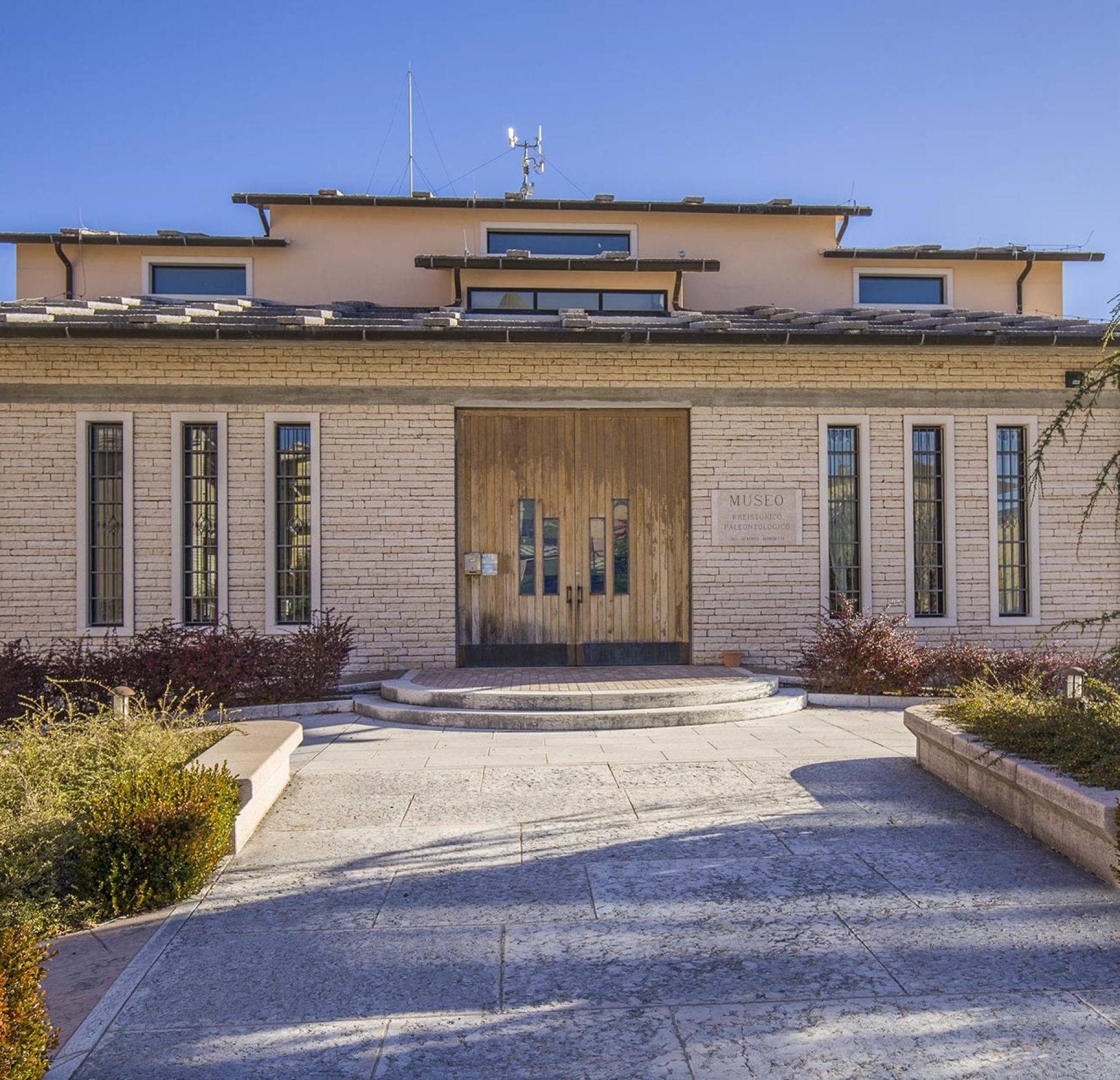
Walk down Piazza Gian Attilio dalla Bona. After a few metres you will see in front of you the large building housing the Palentological Prehistoric Museum.
Inaugurated in 1998, the museum exhibits the history of the western Lessinia area. Inside its halls you can find fossils dating back millions of years and prehistoric artefacts from the Palaeolithic, Neolithic and Iron Age. It is a unique opportunity to appreciate the relationship that was established between man and the lands of Lessina.
In the Hall of Human Prehistory, important finds can be admired, ranging from the Lower Palaeolithic to the Neolithic to the Metal Age. Some of the materials on display here were found in the Grotta di Fumane and Riparo Tagliente di Stallavena.
From these sites come flint artefacts, bone engravings, painted stones and the cast of the burial site found in the Riparo Tagliente Cave, dating back to the Upper Palaeolithic. Also from the same period is 'The Shaman' displayed in a showcase. Furthermore, pottery and stone tools from the Copper to Iron Age can be admired. Very interesting is the skeleton in anatomical position of a bison from ancient prehistory, placed in the central display case.The Palaeontology room, on the other hand, exhibits numerous examples of fossils found during the intensive and widespread quarrying of the nearby quarries of 'Pietra della Lessinia', an ornamental stone typical of the area formed in a marine environment. The sedimentation of this stone has incorporated in its formation process
numerous fossils. The finds discovered in the 'Lastame' date back to the Upper Cretaceous period (between approximately 94 million and 86 million years ago) and include the remains of invertebrates, such as sea urchins or ammonites, and marine vertebrates that populated an open sea area that was part of the Tethys Ocean.
The latter occupy most of the room, with large slabs of pinkish-white limestone preserving skeletal remains of sharks, similar to today's white sharks, of considerable size (7-8 metres long).
A true pearl of the museum is the Cretodus shark find, preserved with the remains of a sea turtle, about 2 metres long. It is the most complete fossil known to date of this type of shark.
Following the path of the road, you arrive in the Marogni district, the oldest in Sant'Anna, and then head towards the Fontana dei Saughi, an imposing construction in the district of the same name, crossed by a narrow alleyway on your left that leads to the road entering the village from the south.
After about 50 metres and crossing the provincial road, you pass in front of the Sant'Anna d'Alfaedo Town Hall and continuing along the pavement you return to Piazza Vittorio Emanuele in front of the large façade of the Church of Sant'Anna d'Alfaedo, which contains unique prehistoric artefacts of international significance.
Continuing along the road to the left of the museum, we descend down a slope flanking the municipal gymnasium, arriving at a beautiful viewpoint over the Corno d'Aquilio and Corno Mozzo mountains and La Lessinia.
Continuing along the side of the gymnasium, turn left and descend past the rest home and a small pine forest to reach the village sports area.
III- ROUTE IN THE VILLAGE OF FOSSE
DURATION: 45min, DISTANCE: 2km DIFFICULTY: medium
Park in front of the parish church of Fosse di Sant'Anna d'Alfaedo, and start along the pavement on your right, which runs alongside the provincial road towards Barozze-Ronconi-Erbezzo.
After a hundred or so metres on your left you will find the village playground within the large area where the events organised during the year by the local association Comitato Fosseland take place. When you arrive near the municipal sports field of the Unione Sportiva Sant'Anna d'Alfaedo sports association, cross the provincial road on your left and take the mule track that climbs towards the village.
Here you can admire the naturalistic landscape that surrounds you as you cross this ancient road bordered by ancient slabs of Lessinia stone, characteristic of the area and used in all the buildings you come across.
Near the first houses of the village on your left you will find a beautiful passage inside a face that will let you enter the historic centre of the village and after a few steps you will be able to see the large stone fountain, an element of fundamental importance for the life of the inhabitants in the past.
Leaving the fountain on your right, go down the narrow street that leads to another fountain at the end of a slight descent, beyond which, after a climb following the mule track, you will arrive at the provincial access road to the village. Along the road you will pass through the centre of the village of Fosse with its houses rich in history and its businesses. At the centre of the village you will pass through the beautiful tree-lined avenue that will lead you to the starting point of your route in front of the church.
FUMANE
Fumane is one of the jewels of Valpolicella, known for its extraordinary variety of landscapes. As you ascend towards the mountainous area of the municipality, the landscape changes into unspoilt woods and meadows, dominated by the majestic profile of Monte Pastello.
I- FROM BREONIO TO MONTE PASTELLO: A Journey through Breathtaking Scenery
Discover the enchanting village of Breonio on a route of medium difficulty, ideal for lovers of nature and spectacular views. The journey begins at the heart of the village, at the ancient medieval church of San Marziale, renowned for its 16th-century frescoes. From here, you will pass through the historic centre and ascend to Monte Crocetta, the first vantage point of the route, from where you can admire a breathtaking view as far as the southern part of Lake Garda.
Continuing on, you will reach the summit of Monte Pastelletto, which offers a 360° view of the beautiful surrounding landscape. Continuing through a dense beech forest, you will arrive at the picturesque contrada Paroletto, with its characteristic underground fountain. The adventure ends with a relaxing walk through a pine forest, which will take you back to the starting point.
II- FROM CAVALO TO MONTE PASTELLO: An Excursion for True Adventurers
Get ready for an exciting adventure along the most challenging route in the series, suitable for those with a good physical fitness. The route starts from the parish church of Cavalo, dedicated to San Zeno Vescovo. After exploring the historic centre, you will head towards the Piazzi district, where a breathtaking view of the valley awaits you.
Before tackling the climb, a small diversions will take you to a fountain-washtub covered in local stone, a true hidden gem. Continuing along path CAI 238, you will reach the district of Molane and then climb to the summit of Monte Pastello, at an altitude of 1112 metres. Here, a stone cross and a spectacular panorama of Monte Baldo, Lake Garda and the Adige Valley will repay your effort. The itinerary ends by returning to the starting point along CAI path 232.
III- GROTTA DI FUMANE E MOLINA: Between Mills and History
The route begins with a visit to the Fumane cave, considered one of the most important archaeological sites in Europe. Known locally as 'I Ossi' (The Bones) for the numerous bone finds, the cave was discovered by archaeologist Giovanni Solinas in the 1960s, which is why it is also called 'Riparo Solinas'. This site represents invaluable evidence of the presence of Neanderthal Man and Homo Sapiens in Europe.
One of the most valuable elements of the site is a red-painted stone depicting an anthropomorphic figure, probably a shaman. This find is considered the oldest known painting in the Old World. Today, the Grotta di Fumane continues to be the subject of archaeological studies, always revealing new information about humanity's remote past.
Once the visit to the cave is over, head by car to explore the picturesque village of Molina with an itinerary of moderate difficulty. The route starts from the square in Molina, in front of the parish church of Sant'Urbano. Along the way, you will encounter historic mills, such as the 'Molin de Lorenso', which still retains its ancient outer wheel.
Climbing northwards, you will reach the contrada di Gorgusello, famous for its ancient Lessinia stone houses and fountains. Here, you can admire the typical 'baito di contrada', a 19th century structure where cheese was once made. The itinerary ends by returning to the starting point, with the possibility of visiting the nearby Waterfall Park, a natural oasis of rare beauty.